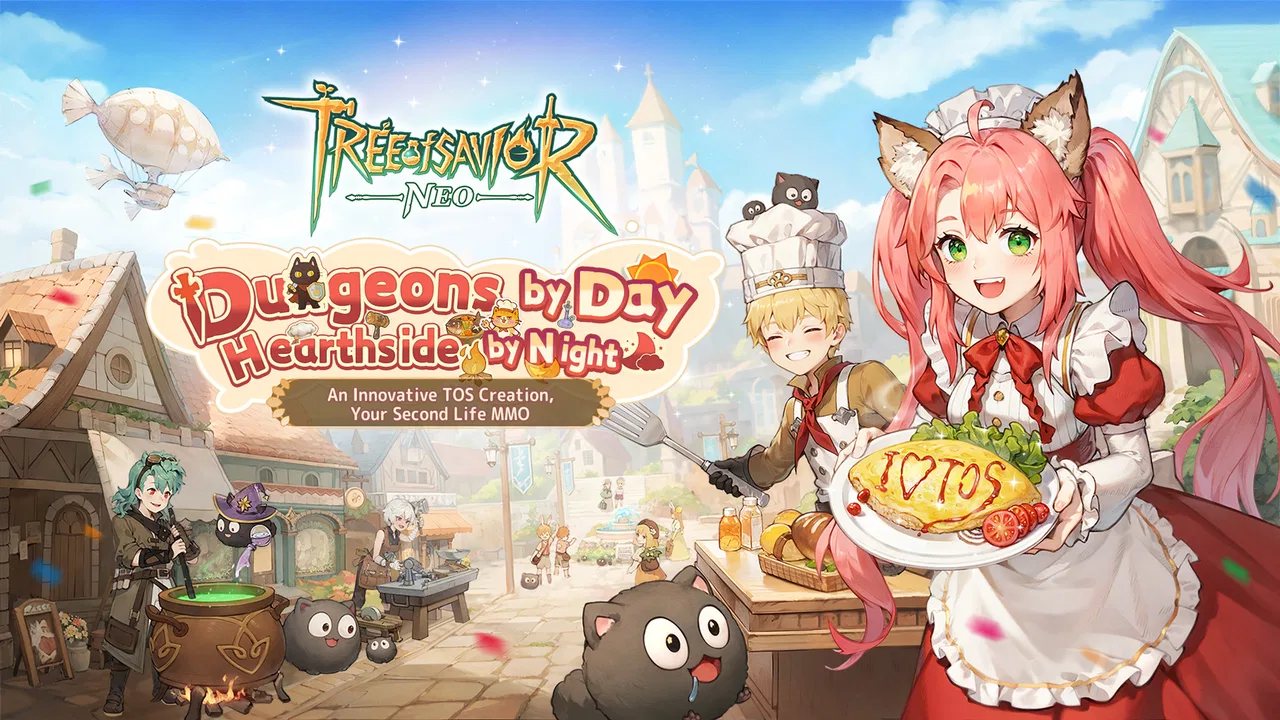
Tree of Savior: NEO
- 4.4
- Rating
- 1.00M
- Installs
- Free
- Price

 Analysis by App-foxy
I spent time with Tree of Savior: NEO as a mobile role-playing game, paying attention not only to its adventure loop but also to how comfortably it works in different situations. Its store summary, “Adventures That Heal Souls,” points toward a gentle emotional tone, while the short description identifies it simply as Tree of Savior: NEO. In practice, I found a game that aims to make a fantasy journey easy to pick up, but one that still asks the player to manage a busy screen, repeated interactions, and the usual pressures of a free-to-play mobile RPG.
That balance matters because a game can be enjoyable and still be inconvenient for someone who needs larger visual targets, more time to react, reduced sensory intensity, or a way to play in short bursts. My experience was not that every player will face the same obstacles. Instead, the important question is whether the game’s presentation and pace fit the way you personally play. For some people, it can be a relaxing fantasy companion. For others, a simpler or more deliberately accessibility-focused role-playing game may be a better match.
How the interface supports reading and navigation
The first thing I noticed was how much information a mobile role-playing game has to place on a relatively small screen. Tree of Savior: NEO combines exploration, character progression, quests, combat feedback, rewards, and menu decisions. That is normal for the genre, but it means the experience is easiest when I give it my full attention rather than trying to operate it while distracted.
You May Also Like

 Blood Strike: 2.5 Anniversary
Blood Strike’s Loadouts Turn Every Drop Into a Tactical Gamble
A close look at Blood Strike’s custom loadouts: how fast access to signature weapons reshapes its battle royale rhythm, rewards preparation, and narrows the gap between fights.

 Pandora - Music & Podcasts
Pandora’s Music Is Easy to Start, but Harder to Recover
Pandora’s strength is its low-effort path from a seed to a station. Its weak spot is how much confidence it asks you to place in connection, setup, and quiet recovery.

 8 Ball Pool
 Is Built on Rivalries, Rematches, and Routine
A close look at the rivalries, rematches, shared routines, and unanswered safety questions that turn a quick pool match into a persistent mobile community.

 Samsung Music
’s Quiet Strength Is Playing What You Already Own
Its reach comes less from spectacle than from dependable access to a personal library. That simplicity is both the app’s strongest retention engine and its ceiling.

 AccuWeather: Weather Radar
AccuWeather Review: A Quick, Clear Forecast for Everyday Decisions
For everyday plans, the best forecast is the one you can understand quickly. AccuWeather makes rain timing, radar, and local conditions easy to act on, with a few trade-offs.

 Hill Climb Racing
Why Hill Climb Racing Still Turns Crashes Into One More Run
A tiny car, a bumpy hill and one more upgrade: Hill Climb Racing keeps resurfacing because its simple chaos makes every near-miss feel personal.
More From Our News Desk



I found it useful to approach the interface in stages. During the opening portion, I concentrated on learning where the main action controls and quest information appeared instead of trying to understand every icon immediately. This reduced the feeling of visual overload. Once I knew which areas mattered for movement, combat, and progression, the screen became easier to read because I was no longer scanning every element with equal importance.
The most practical readability tip is to pause before tapping through rewards or quest prompts. Mobile RPG interfaces often place several buttons close together, and rushing can lead to opening a menu, accepting an activity, or spending attention on a notification when I intended to continue the story. I recommend treating each new screen as a short navigation lesson: identify the primary action first, then look for secondary choices.
Players who rely on strong contrast, larger text, or very clear separation between controls should test the game early rather than assuming that a colorful fantasy presentation will be comfortable. Decorative backgrounds and combat effects can compete with functional information. I could follow the overall flow, but comfort depends greatly on screen size, brightness, and eyesight. A larger phone or tablet can make the experience noticeably less cramped than a compact handset.
I also found that the game is easier to understand when I keep a consistent routine. I check the current objective, complete the immediate activity, review the reward, and only then explore other menus. That workflow is more than a personal preference: it prevents the progression systems from feeling like a wall of unrelated choices. New players who jump between every available prompt may spend more time navigating than adventuring.
Learning the game without visual fatigue
For someone who reads slowly or needs extra time to interpret symbols, the safest approach is to avoid playing at the same time as another demanding task. I would not recommend trying to follow dialogue, monitor combat, and answer messages on a crowded commute. The game is more approachable when I can stop between actions and confirm what the screen is asking me to do.
Text-heavy moments are also a useful test. If the writing, labels, or quest instructions feel tiring on your device, changing the phone’s general display settings may help, but that is not the same as the game offering dedicated text controls. I would make this check before investing much time. A player who needs adjustable font size or highly configurable interface scaling should be especially cautious.
Navigation becomes more manageable when I resist the temptation to optimize immediately. Early play is better spent learning the relationship between objectives, character growth, and available activities. Once that mental map is clear, I can make decisions faster and with fewer accidental taps. This is one of the less obvious strengths of a structured routine: it makes the game feel calmer even when the interface itself remains busy.
Motor, sensory, and situational considerations
Touch controls can be welcoming because they remove the need for a physical controller, but they also create their own demands. Repeated tapping, holding a phone securely, and reaching across the display may be uncomfortable for players with limited dexterity, hand pain, tremors, or fatigue. I found that short sessions were easier to manage than trying to complete a long stretch in one sitting.
My recommendation is to play with the phone supported rather than gripping it continuously. A stand, a stable surface, or a relaxed two-handed position can reduce strain. This is particularly helpful during sections where I am watching the action and making frequent choices. It also makes accidental movement less likely than playing one-handed while walking or carrying something.
Players with motor limitations should pay attention to whether the required controls feel forgiving in real use. A game may be technically playable through touch and still be tiring if buttons are small, closely grouped, or dependent on quick repeated input. Tree of Savior: NEO was more comfortable for me when I slowed down and used deliberate taps, but that does not guarantee the same result for every player. If precise touch interaction is difficult, the early game is the right place to decide whether the control burden is acceptable.
Sensory comfort is another important variable. Fantasy role-playing games commonly use movement, color, sound, notifications, and combat effects to communicate progress. That energy can make an adventure feel alive, yet it can also become distracting for people sensitive to flashing visuals, layered audio, or constant on-screen activity. I suggest lowering device volume and brightness before assuming the game is too intense. If the presentation still feels overwhelming, the problem may be the game’s overall style rather than a setting I can easily change.
Playing with sound off is a realistic option for everyday use, especially in a shared room, workplace break, waiting area, or public transport. I found that visual cues carry much of the basic flow, although silence can make the experience feel less atmospheric and may reduce the immediacy of some feedback. This creates a clear trade-off: quiet play is more socially flexible, but players who depend on audio signals should check whether visual communication is sufficient for them.
Short sessions, interruptions, and everyday use
A realistic scenario for me was playing during a short evening break. I had enough time to complete a small objective, review character progress, and stop without needing to commit to a long uninterrupted session. That made the game easier to fit around daily life than a traditional desktop role-playing game. Still, I would not begin a demanding sequence when I knew I might be interrupted, because losing track of objectives or rewards can make the next return less comfortable.
This is where the game’s mobile format helps and hurts. It is available on a phone, so it is close at hand, but that does not mean every moment is a good time to play. Bright effects can be unsuitable in dark rooms, touch controls are awkward with gloves or wet hands, and a small screen is difficult to share with someone who needs to observe the action. If you have limited energy, I would use the game as a focused activity rather than background entertainment.
For players who need frequent breaks, I recommend stopping after a clear transition: finishing an objective, leaving a menu, or reaching a natural pause. Stopping mid-decision increases the chance that I forget what I was doing. This simple habit also reduces cognitive load when I return later. It is a practical way to make a complex role-playing game feel more predictable without changing its systems.
The game is free to play, which lowers the barrier to testing it. It includes in-app purchases ranging from $0.49 to $99.99 per item, so I would approach the shop carefully, particularly if visual prompts or progression rewards make optional spending feel urgent. A useful personal rule is to decide in advance whether I am only exploring the free experience. That keeps the purchase layer separate from the accessibility question: I can judge the controls and presentation without letting a tempting offer decide whether the game is worth my time.
Who will feel at home here
I think Tree of Savior: NEO is most suitable for players who enjoy fantasy progression, can tolerate a visually active interface, and like discovering a character journey through repeated quests and upgrades. It also suits people who want a mobile alternative to a larger role-playing game and are comfortable learning a number of menus gradually.
It may be less suitable for someone looking for a minimalist interface, completely quiet presentation, highly adjustable text, or controls designed around very limited dexterity. Players who want a slow, purely narrative experience may also find the surrounding progression tasks more involved than expected. In those cases, a story-first game with fewer systems or a turn-based title with more time between inputs could be a better choice.
Compared with a conventional offline role-playing game, this one feels more connected to the habits of mobile play: short visits, touch interaction, and a progression structure that encourages regular returns. Compared with a very simple casual adventure, it demands more attention because there are more layers to understand. That middle position is its appeal, but also its main accessibility challenge. It is easier to carry than a console or computer game, yet not automatically easier to operate.
Remaining barriers worth considering
The biggest barrier I encountered was not a single control but the accumulation of small demands. Reading objectives, identifying the correct action, watching the screen, managing taps, and deciding whether a reward or upgrade matters can all happen close together. Each step is manageable on its own. Together, they can be tiring for players with attention limitations, visual fatigue, or reduced processing speed.
Another concern is the difference between being able to start and being able to sustain play. A new player may understand the opening guidance but later face a denser set of choices. I would not judge the game solely by its first few minutes. Give yourself enough time to reach the point where the progression loop becomes familiar, then ask whether the routine feels clearer or more demanding.
The free-to-play structure can add mental friction as well. Even when purchases are optional, shop visibility and reward presentation can make the player repeatedly evaluate value, urgency, and progress. For some people, that is harmless. For others, especially anyone trying to avoid impulsive spending or decision overload, it is a reason to set firm boundaries before playing.
Device conditions matter more here than many reviews admit. A small display, low battery, bright sunlight, poor touch response, or noisy surroundings can turn an acceptable session into a frustrating one. I would test the game in the environment where I actually plan to use it, not only at home with ideal lighting and uninterrupted attention. That test tells me more than a general claim that the controls are easy.
On the technical side, the game is listed for Android devices using version 8.0 or later, and the current version is 1.1.1. That makes checking the operating system a sensible first step before downloading. The developer is NEOCRAFT LIMITED, and the game has reached over a million installs, with a 4.4 average from around twenty-one thousand ratings. Those figures suggest a substantial audience, but they do not replace personal testing: comfort with touch, text, sound, and visual density remains individual.
My inclusive verdict
I came away viewing Tree of Savior: NEO as a welcoming fantasy RPG in intention, but not a universally effortless one. Its strongest accessibility quality is flexibility of context: I can play quietly, in short sessions, and on a mobile device without needing a dedicated gaming setup. Its weaker side is the concentration of information and interaction that comes with a full mobile role-playing structure.
I would recommend trying it when you want a portable fantasy adventure and can comfortably manage a busy touch interface. Start with a supported phone position, moderate brightness and volume, and a simple objective-by-objective routine. Avoid judging the game while multitasking, and decide your spending limits before the shop becomes part of your normal play pattern.
For players with visual, motor, sensory, or cognitive needs, the right conclusion is personal rather than absolute. If the screen remains readable, deliberate taps feel comfortable, and the progression loop becomes predictable, the game can be a pleasant way to fill short breaks. If you need extensive text scaling, very sparse layouts, minimal effects, or exceptionally forgiving controls, another role-playing game may serve you better.
As a free game rated Everyone 10+, it is easy to sample without committing money at the start. I would treat that as an invitation to perform a practical accessibility check: can you read the important information, reach the controls without strain, play at a comfortable sensory level, and return after an interruption without confusion? If the answer is yes, Tree of Savior: NEO has enough atmosphere and progression to reward continued exploration. If not, skipping it is not a failure; it simply means its particular mix of mobile convenience and interface density is not the right fit for your needs.
FAQs for Tree of Savior: NEO
01What is Tree of Savior: NEO?
Tree of Savior: NEO is a fantasy MMORPG that combines colorful anime-inspired visuals with large-scale exploration, character progression, quests, dungeons, and real-time combat. Players create a character, choose or develop a class, collect equipment, and explore a world filled with monsters and story content. Its design is aimed at both solo adventurers and players who enjoy social activities such as parties, guilds, and competitive encounters.
02Is Tree of Savior: NEO free to download and play?
Tree of Savior: NEO is generally presented as a free-to-play mobile game, so players can download it without paying an upfront purchase price. However, the game may include optional in-app purchases for items, currency, progression resources, cosmetics, or other conveniences. Before installing, it is worth checking the store listing for the current pricing model, supported regions, age rating, and whether additional downloadable data is required after the initial installation.
03Does Tree of Savior: NEO require an internet connection?
Yes, Tree of Savior: NEO is designed as an online multiplayer RPG and normally requires a stable internet connection to access its servers. An offline mode should not be expected, since character data, events, matchmaking, social features, and much of the gameplay depend on online services. Using Wi-Fi is recommended when downloading large updates or playing for extended periods, particularly on mobile data plans with limited allowances.
04Can beginners enjoy Tree of Savior: NEO without spending money?
Beginners can usually experience the main adventure, complete quests, improve their character, and participate in many activities without making purchases. The early progression systems are intended to introduce combat, equipment, classes, and exploration gradually. Nevertheless, free-to-play MMORPGs may offer paid advantages or time-saving items, so progress can become more demanding later. Players who prefer a relaxed experience should focus on daily rewards, events, efficient upgrades, and careful resource management.
05What device and account requirements should I check before downloading?
Before downloading Tree of Savior: NEO, check that your Android or iOS device meets the minimum operating-system, processor, memory, and storage requirements shown on the official store page. The game may need considerably more free space than the download size because of updates and additional assets. A stable connection is also important, and the game may require an account or platform login to save progress and access online features across supported devices.
Pros
- Faithful anime-inspired visuals with colorful environments and character designs.
- Large class system encourages experimentation and varied playstyles.
- Auto-battle and quest features make routine progression more convenient.
- Frequent loot drops and upgrades provide a steady sense of progression.
- Multiplayer activities add variety through parties
- guilds
- and cooperative content.
Cons
- Progression can feel grindy once early quests and rewards are completed.
- The many systems and menus may overwhelm new players at first.
- Auto-play reduces the need for active input during some combat sections.
- Power gaps may appear between free players and users who spend regularly.
- Performance can vary on older phones
- especially during crowded encounters.

Tree of Savior: NEO
Gallery